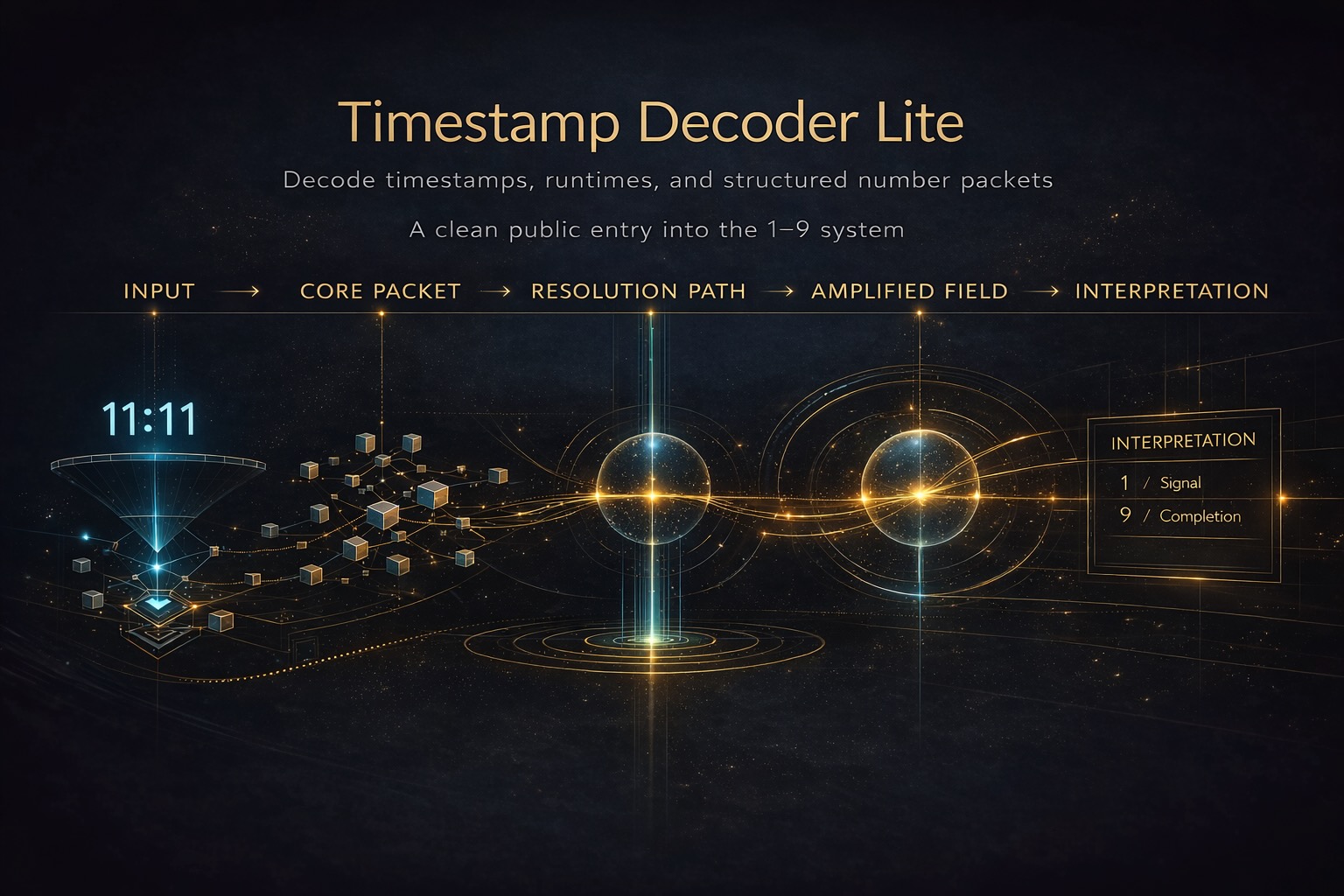
Timestamp Decoder Lite
A clean public doorway into the 1–9 system.
Enter a timestamp, runtime, or packet-style input to see the visible packet, its Resolution, and the field it creates.
Lite keeps the read simple, readable, and diagnostic.
Lite vs Full
Shows the visible packet, Resolution, amplified field, and a short plain-language read.
Adds deeper packet behavior, expanded field analysis, library anchors, verse overlay, and full export tools.
Examples: 1:38, 11:11, 45:90, 2:16, or a full runtime like 1:01:15.
Lite shows the packet, Resolution, amplified field, and a short explanation of why the read works.
Verse-supported Samples
Show supported references. Exact overlay language appears in the decode when a supported reference is active.
How Lite Works
Lite keeps the read simple:
- identify the visible packet
- show the Resolution
- show the amplified field
- give a short readable interpretation
- surface detected library anchors
Full Timestamp Decoder expands each layer into deeper structural behavior.
Why It Works
Lite shows the basic mechanics behind the read:
- the timestamp splits into left and right packets
- addition produces the Resolution
- multiplication produces the amplified field
This keeps the system transparent without exposing the deeper diagnostic layers.
What Full Timestamp Decoder Adds
Full Timestamp Decoder opens deeper packet behavior, expanded field analysis, library anchors, verse overlay, and full export tools.
Timestamp Decoder Lite stays focused on the public entry read: visible packet, Resolution, amplified field, and a short readable interpretation.
What You Get
The visible timestamp or runtime split into its main packet structure.
How the packet resolves through the 1–9 system.
The secondary pressure or emphasis created by the packet.
A short, readable summary of what the packet is doing.
Tracked number anchors detected in this packet.
Shows how the title or source context interacts with the packet.